INDIA SIGNALS
Why India’s Election Infrastructure Is One of the Largest Coordination Systems on Earth
India’s elections are not only democratic events. They are massive national coordination systems involving logistics, administration, transportation, technology, security infrastructure, and institutional workflows operating simultaneously across extraordinary geographic and social diversity.
Systems Intelligence
Democratic Infrastructure
Governance Coordination
Every Indian election activates a nationwide system that moves people, machines, security personnel, transportation networks, administrative workflows, and institutional processes across mountains, megacities, forests, deserts, islands, villages, and remote regions within a tightly coordinated democratic framework.
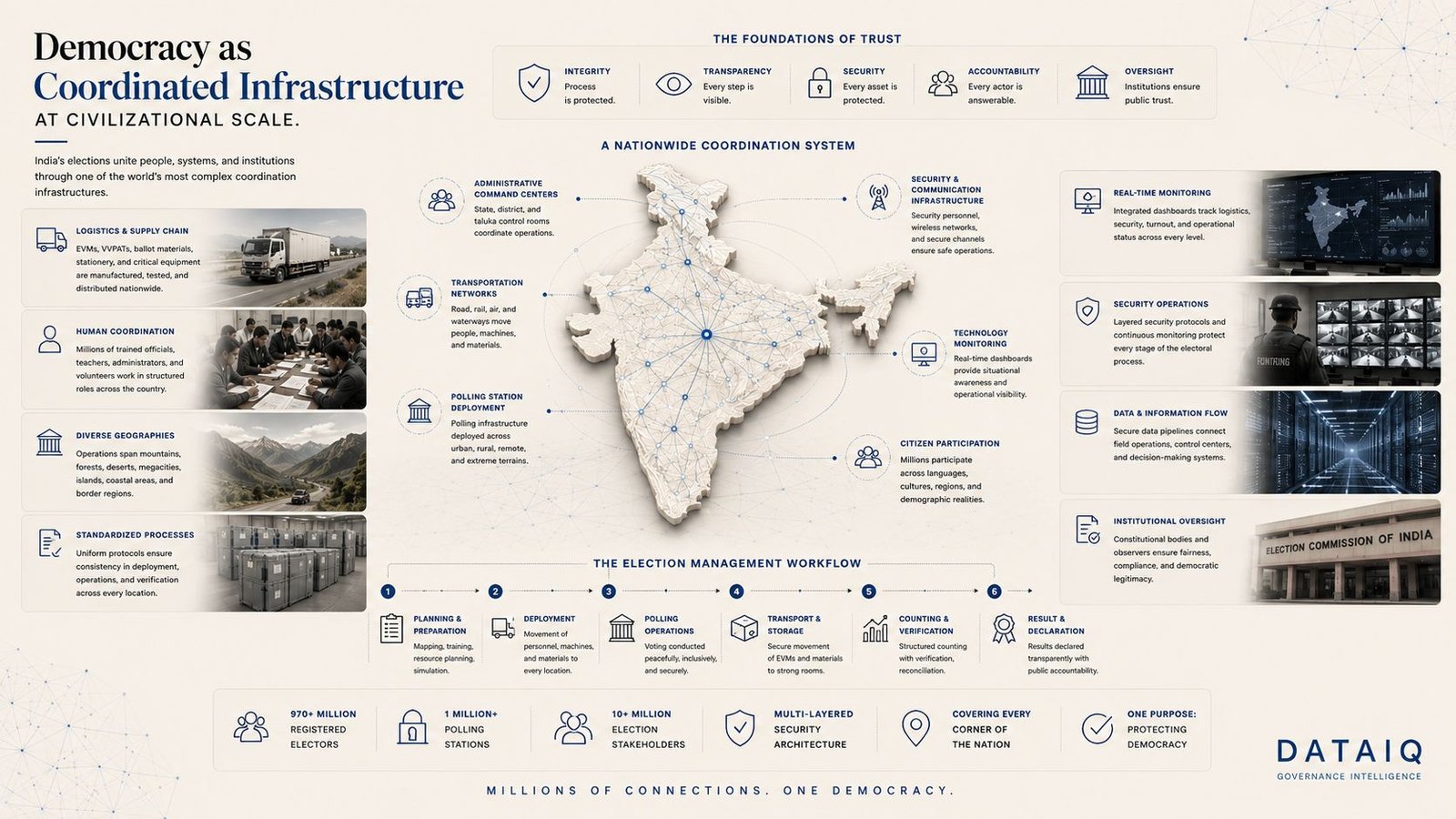
India’s election infrastructure operates as a nationwide democratic coordination system involving logistics, governance, transportation, administration, security, and public participation.
Elections at Civilizational Scale
India’s elections operate across one of the most complex democratic environments in the world.
Electoral systems must coordinate participation across enormous population densities, multiple languages, varying infrastructure conditions, difficult terrain, regional realities, and geographically dispersed polling environments.
At this scale, elections become more than political processes. They become recurring national coordination systems.
Geographic Reach
Election systems operate across mountains, forests, villages, islands, deserts, and dense urban environments.
Human Coordination
Millions of officials, administrative workers, transportation teams, and security personnel coordinate election workflows.
Institutional Systems
Elections depend on procedural standardization, coordinated administration, monitoring systems, and layered oversight.
Simplified Election Coordination Architecture
Election Commission Infrastructure
↓
Administrative Coordination
↓
Transportation and Logistics
↓
Security and Monitoring
↓
Democratic Participation
Standardization Makes Scale Possible
One of the most important features of India’s election infrastructure is procedural standardization.
Election workflows are designed around consistent administrative procedures, coordinated operational systems, and repeatable democratic processes.
Without standardization, managing democratic participation at India’s scale would become significantly more difficult.
The Human Infrastructure Behind Elections
Election systems are often discussed through institutions and technologies. But large-scale democratic coordination ultimately depends on people.
Polling officials, transportation teams, counting staff, security personnel, administrative workers, and local coordinators collectively sustain the operational layer of Indian democracy.
Behind every election result is a massive human coordination effort operating within institutional structure.
Technology and Democratic Coordination
Modern election infrastructure increasingly depends on technology-assisted coordination systems.
Digital voter systems, machine tracking workflows, communication infrastructure, administrative dashboards, and monitoring systems help manage elections across national scale.
India’s electoral ecosystem is evolving not only as a democratic process, but also as a large-scale governance coordination platform.
India’s elections function because institutions, logistics, technology, administration, security systems, and public participation operate together within a coordinated democratic framework.
Understanding Democracy Through Systems
Elections are often understood through campaigns and political outcomes. But underneath those visible layers are deeply coordinated systems responsible for enabling democratic participation.
India’s election infrastructure demonstrates how institutions, operational discipline, governance systems, and procedural coordination can function across extraordinary scale and diversity.
Understanding these systems helps citizens understand democracy not only as politics, but as public coordination operating at national scale.
```
Source article reference: fileciteturn15file0L1-L340
# DATAIQ — ARTICLE 05 (PUBLISH READY)
```html
INDIA SIGNALS
Why India’s Election Infrastructure Is One of the Largest Coordination Systems on Earth
India’s elections are not only democratic events. They are massive national coordination systems involving logistics, administration, transportation, technology, security infrastructure, and institutional workflows operating simultaneously across extraordinary geographic and social diversity.
Systems Intelligence
Democratic Infrastructure
Governance Coordination
Every Indian election activates a nationwide system that moves people, machines, security personnel, transportation networks, administrative workflows, and institutional processes across mountains, megacities, forests, deserts, islands, villages, and remote regions within a tightly coordinated democratic framework.

India’s election infrastructure operates as a nationwide democratic coordination system involving logistics, governance, transportation, administration, security, and public participation.
Elections at Civilizational Scale
India’s elections operate across one of the most complex democratic environments in the world.
Electoral systems must coordinate participation across enormous population densities, multiple languages, varying infrastructure conditions, difficult terrain, regional realities, and geographically dispersed polling environments.
At this scale, elections become more than political processes. They become recurring national coordination systems.
Geographic Reach
Election systems operate across mountains, forests, villages, islands, deserts, and dense urban environments.
Human Coordination
Millions of officials, administrative workers, transportation teams, and security personnel coordinate election workflows.
Institutional Systems
Elections depend on procedural standardization, coordinated administration, monitoring systems, and layered oversight.
Simplified Election Coordination Architecture
Election Commission Infrastructure
↓
Administrative Coordination
↓
Transportation and Logistics
↓
Security and Monitoring
↓
Democratic Participation
Standardization Makes Scale Possible
One of the most important features of India’s election infrastructure is procedural standardization.
Election workflows are designed around consistent administrative procedures, coordinated operational systems, and repeatable democratic processes.
Without standardization, managing democratic participation at India’s scale would become significantly more difficult.
The Human Infrastructure Behind Elections
Election systems are often discussed through institutions and technologies. But large-scale democratic coordination ultimately depends on people.
Polling officials, transportation teams, counting staff, security personnel, administrative workers, and local coordinators collectively sustain the operational layer of Indian democracy.
Behind every election result is a massive human coordination effort operating within institutional structure.
Technology and Democratic Coordination
Modern election infrastructure increasingly depends on technology-assisted coordination systems.
Digital voter systems, machine tracking workflows, communication infrastructure, administrative dashboards, and monitoring systems help manage elections across national scale.
India’s electoral ecosystem is evolving not only as a democratic process, but also as a large-scale governance coordination platform.
India’s elections function because institutions, logistics, technology, administration, security systems, and public participation operate together within a coordinated democratic framework.
Understanding Democracy Through Systems
Elections are often understood through campaigns and political outcomes. But underneath those visible layers are deeply coordinated systems responsible for enabling democratic participation.
India’s election infrastructure demonstrates how institutions, operational discipline, governance systems, and procedural coordination can function across extraordinary scale and diversity.
Understanding these systems helps citizens understand democracy not only as politics, but as public coordination operating at national scale.